10 Red Flags Inspectors Look for in Bay Area Commercial Properties
The SF Bay Area has some of the most valuable commercial real estate in the world - and some of the most problematic building stock. The region's building history spans from Victorian-era wood-frame commercial to 1950s tilt-up concrete to modern Class A construction, all subject to seismic risk, marine moisture exposure, and a regulatory environment that has evolved dramatically over the past 50 years.
After inspecting commercial properties across the nine Bay Area counties, certain problems appear repeatedly. These are the red flags that drive repair cost negotiations, affect lender underwriting, and - when missed - become expensive post-closing surprises. Here are ten of the most common.
1. Deferred Roof Maintenance
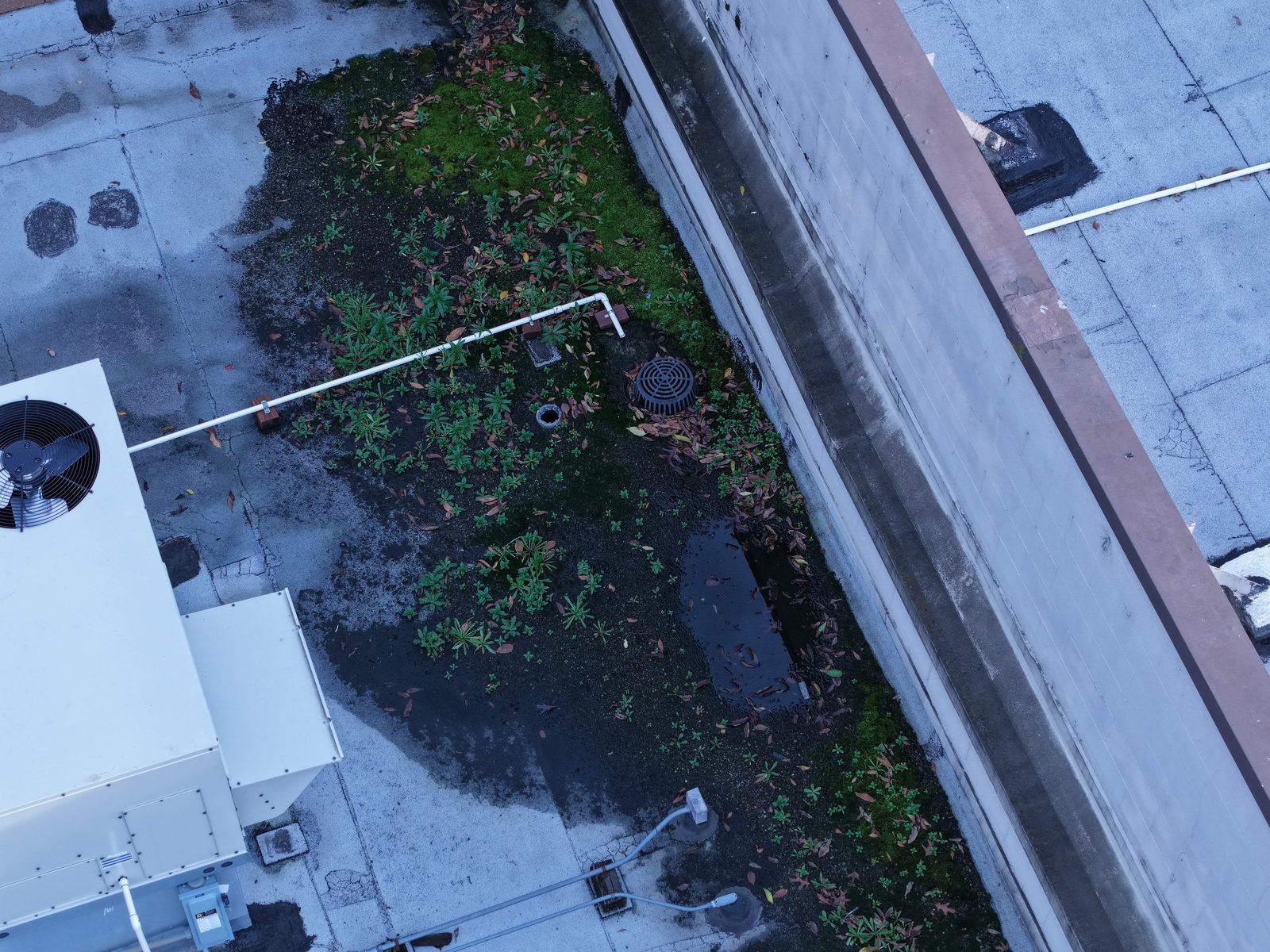
Flat and low-slope commercial roofs are the single most common source of significant findings in Bay Area commercial inspections. A roof that's been poorly maintained - failed flashing at penetrations, standing water, deteriorated membrane, improper patches over prior repairs - can fail catastrophically during a winter storm and cause hundreds of thousands of dollars in interior damage before a repair crew can respond.
What to look for: Visible patches, ponding areas, failed coping at parapet walls, deteriorated pitch pans at penetrations, and interior ceiling staining. On larger buildings, aerial thermography is the most effective tool for detecting moisture saturation before it's visible from below.
2. Structural Deficiencies and Deferred Foundation Issues
Structural problems are among the most consequential findings in a commercial inspection - and among the most commonly deferred. Older Northern California commercial buildings frequently have foundation cracking, deteriorated crawlspace framing, settlement-related displacement at door frames and windows, and structural modifications made without permits that compromise the original load path.
Common structural findings include:
- Foundation cracking and settlement: Differential settlement can indicate soil movement, drainage problems, or inadequate original footings. Horizontal cracking in concrete or masonry foundations is particularly significant.
- Crawlspace deterioration: Wood framing in crawlspaces is vulnerable to moisture damage, fungal growth, and pest damage - all invisible from above. Many buyers don't realize the condition of the substructure until it's documented in an inspection report.
- Unpermitted structural modifications: Removed load-bearing walls, added openings, and modified structural systems without permits are common in buildings that have changed use over the decades. These conditions require engineering evaluation.
- Deferred maintenance on structural systems: Masonry spalling, deteriorated mortar joints, and corrosion of structural steel connections are findings that tend to get deferred until they become urgent.
3. Aging Electrical Systems
Bay Area commercial buildings from the 1960s through the early 1980s often have electrical infrastructure that is approaching or has exceeded its expected service life. Specific issues to watch for:
- Federal Pacific and Zinsco panels: These panel brands have well-documented breaker failure modes and are typically recommended for replacement by qualified electrical contractors.
- Aluminum branch wiring (pre-1972): Aluminum wiring used for 15 and 20 amp branch circuits is a fire hazard at connection points. Requires either full rewiring or the installation of CO/ALR connectors at every device - both are expensive.
- Undersized service: Many older commercial buildings were wired for electrical demands that are a fraction of what modern tenants require. A building with 200A single-phase service may need a service upgrade to attract quality tenants or to meet building code for proposed uses.
4. Moisture Intrusion and Mold
The Bay Area's marine climate - particularly in San Francisco, the East Bay hills, and Marin - creates persistent moisture exposure that older building envelopes were often not designed to manage adequately. Modern waterproofing systems and sealants were not available in the 1950s and 60s; buildings from that era may have no meaningful moisture management at the building envelope.
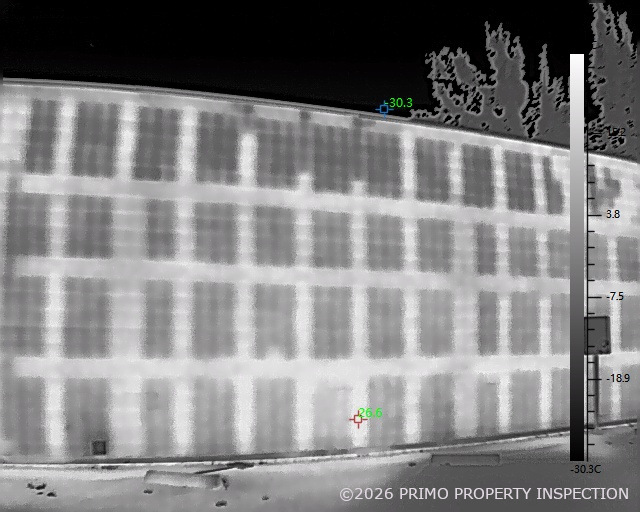
Moisture intrusion is insidious because it often occurs in concealed locations - inside walls, under flooring, behind ceilings - where it can go undetected for years while causing structural damage and creating conditions for mold growth. By the time visible mold appears, the damage is often extensive.
What to look for: Ceiling staining, efflorescence on masonry, musty odors, floor delamination at building perimeter, and deteriorated caulking at windows and doors. Aerial thermography can identify envelope moisture intrusion that is not visible during standard inspection.
5. Deferred HVAC Replacement
Commercial HVAC equipment has a typical useful life of 15–25 years depending on equipment type and maintenance history. Bay Area commercial buildings often have rooftop package units, split systems, or hydronic systems that are operating past their expected service life - still functioning, but likely to fail within the next few years.
The problem for buyers is that a functioning HVAC system looks the same as a healthy HVAC system from the outside. The difference shows up in service records, equipment age stickers, refrigerant type (R-22 is now phased out and very expensive to service), and careful inspection of compressor condition, coil fouling, and heat exchanger integrity.
6. Plumbing System Age and Condition
Bay Area commercial buildings from the mid-20th century frequently have galvanized steel water supply piping that has reached or exceeded its 40–60 year service life. From the outside, these pipes can look fine. Inside, they're often heavily corroded and partially occluded with mineral deposits, resulting in reduced flow, pressure drops, and leaks that can occur without warning.
Cast iron DWV (drain, waste, vent) piping is more durable but is still subject to corrosion and cracking in older buildings, particularly at horizontal runs where standing water accelerates deterioration. A sewer camera inspection is the only reliable way to evaluate underground and concealed plumbing - one of the highest-value add-ons for any older building.
7. ADA Non-Compliance
The Americans with Disabilities Act has been in effect since 1992. Despite this, a significant portion of older commercial buildings have accessibility deficiencies - in parking, path of travel, restrooms, or signage - that have never been remediated.
The critical issue for buyers: when you purchase a non-compliant property, you become the responsible party for the violations. Any alteration or renovation that triggers path-of-travel requirements can force ADA upgrades throughout the building, not just in the altered area. And third-party ADA lawsuits are common in California - the state has a plaintiff-friendly legal framework that generates significant litigation against non-compliant commercial properties.
8. Deferred Parking Lot Maintenance
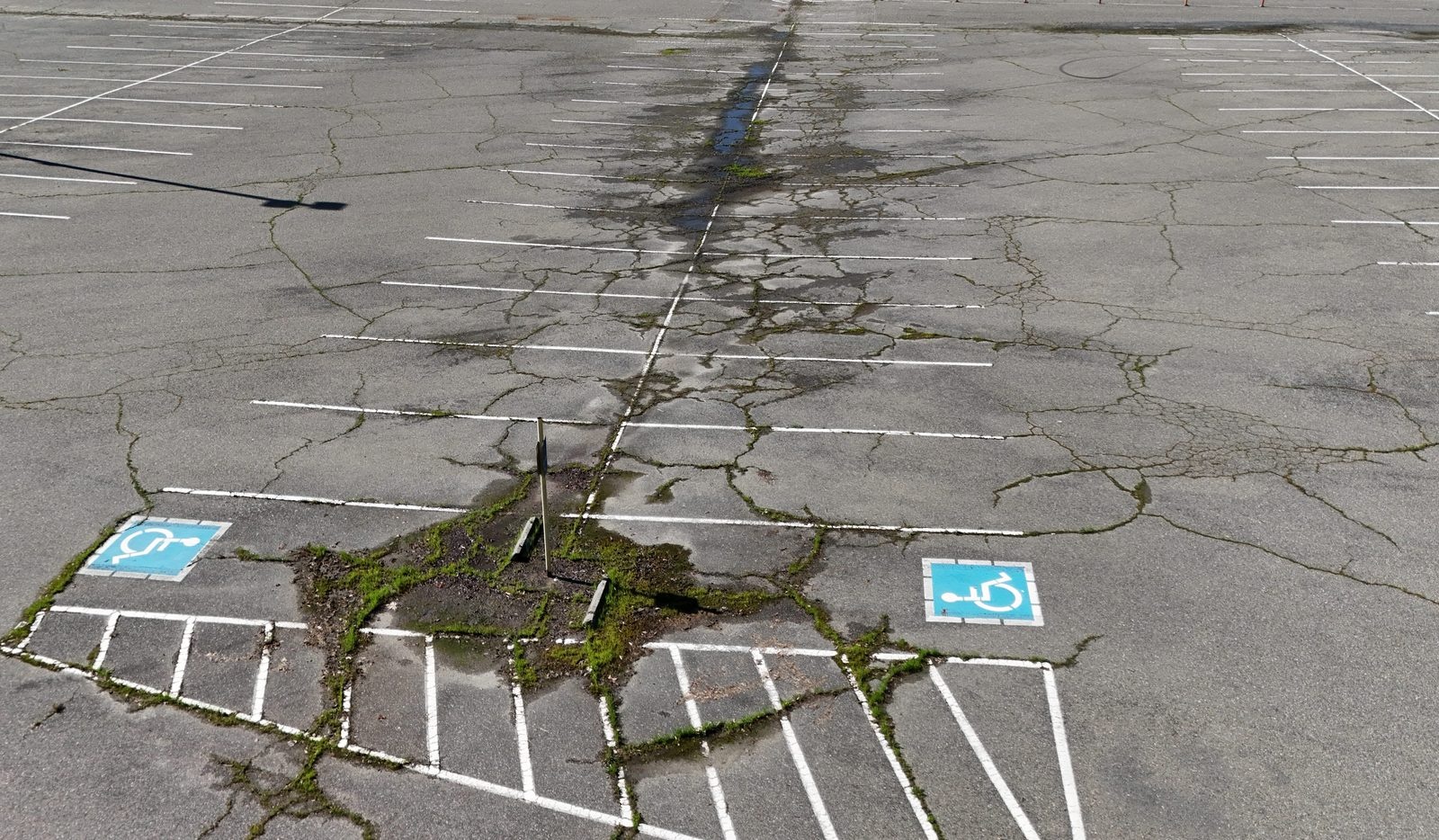
Parking lots deteriorate visibly and expensively. Bay Area asphalt is subject to heavy UV exposure, temperature cycling, and - in newer developments - the weight of large commercial vehicles and delivery trucks that the original pavement was not designed for. A parking lot that hasn't been seal-coated and crack-filled regularly will develop extensive alligator cracking and pothole formation that eventually requires full removal and repaving.
This is a high-visibility item that buyers often notice but underestimate. A large parking lot in poor condition represents significant deferred capital, and the work is disruptive to tenants during construction.
9. Unknown Environmental Conditions
The Bay Area's industrial history is extensive: refineries, auto repair shops, dry cleaners, printing operations, agricultural chemical storage, and manufacturing facilities have operated across every county. Many of these operations left behind soil and groundwater contamination that is now regulated under California's environmental laws.
A commercial property inspector can identify indicators of potential environmental conditions - floor staining, underground storage tank (UST) indicators, vent pipes, and fill points - but environmental assessment is a specialty that falls outside the ComSOP. A Phase 1 ESA is the appropriate tool for evaluating environmental risk, and it's essential for any property with a history of industrial, automotive, agricultural, or dry cleaning use.
What the inspector flags: Floor staining patterns, mysterious vent pipes, former UST removal indicators, and historical uses visible in building records. These indicators should trigger a Phase 1 ESA if not already completed.
10. Life Safety System Deficiencies
Fire suppression systems, fire alarms, emergency lighting, and egress conditions in older Bay Area commercial buildings frequently have deficiencies - some minor, some serious. Buildings that have changed use, been subdivided, or had tenant improvements over the years often have fire separation or egress conditions that don't comply with the current IBC or California Fire Code.
Life safety deficiencies are not optional deferred maintenance. They are code violations that represent genuine risk to occupants and significant liability for the property owner. They also affect insurance coverage and can trigger inspection requirements from the local fire authority. Any identified life safety deficiency in an inspection report should be evaluated for code compliance and remediated promptly after acquisition.
Common findings: Sprinkler coverage gaps after TI work, fire door assemblies with failed closers or incorrect hardware, blocked egress paths, non-illuminated exit signs, and inadequate fire separation between occupancies.
The Bottom Line for Bay Area Buyers
None of these issues are reasons to walk away from a property - they're reasons to understand what you're buying. Every one of these conditions can be remediated; the question is whether the purchase price reflects the cost of doing so. A thorough commercial inspection gives you that information before you're legally obligated to close.
If you're looking at a commercial property in the Bay Area and want to discuss what an inspection would cover, reach out directly.