NFPA 70B Annual Electric Infrared Inspections
Required annual infrared scanning of electrical distribution equipment that identifies overloaded panels, failing connections, and hazards before they cause fires and critical equipment failure.
What It Is
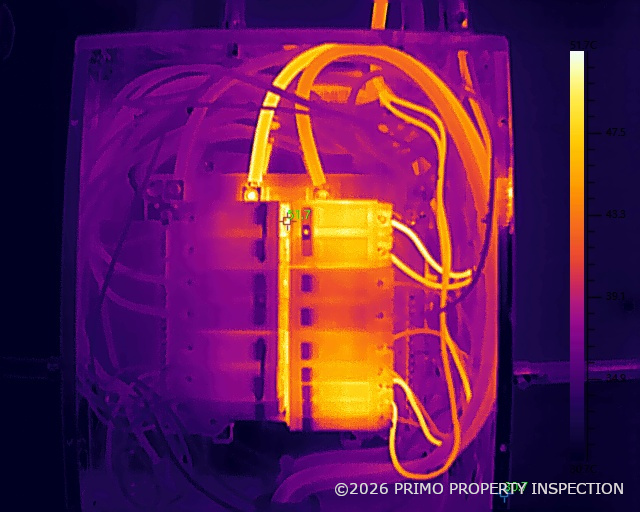
An infrared electrical inspection uses a thermal camera to measure surface temperature across an entire panel or piece of equipment in a single scan while it is energized and under load. Heat that would be completely invisible during a standard visual inspection, inside a breaker, at a bus bar connection, along a conductor, registers clearly as a temperature differential against the surrounding equipment. It is usually the fastest and most effective way to survey large amounts of electrical equipment and switchgear. Our inspector is certified as a Level III thermographer, the highest standard in the industry, ensuring that thermal imagery is correctly interpreted, not just collected.
Now a Mandatory Standard, Not Just Best Practice
NFPA 70B, the Standard for Electrical Equipment Maintenance, has long been the governing document for commercial electrical maintenance programs. The 2023 edition converted 70B from a recommended practice into a mandatory standard, replacing advisory "should" language with "shall" throughout, and it establishes explicit requirements for infrared thermographic inspection of electrical distribution equipment, switchgear, panelboards, and motor control centers on a defined maintenance interval. For most commercial buildings that means an annual inspection frequency as the appropriate baseline.
What the Scan Covers
- Main switchgear, distribution panels, sub-panels, and motor control centers
- Visible conductors at termination points, scanned with the panel cover open or through an IR-transparent window
- Findings classified by severity based on temperature differential, from monitoring items to emergencies requiring immediate correction
What You Get
A written report with thermal and visible-light images of each finding, temperature data, severity classification, and recommended action, documentation that supports insurance requirements and becomes part of the building's maintenance record. Findings are cross-referenced with the core inspection report where applicable.
Build Your Custom Inspection Scope
Tell us about your property, your timeline, and your due diligence needs. We'll recommend the right combination of services.